
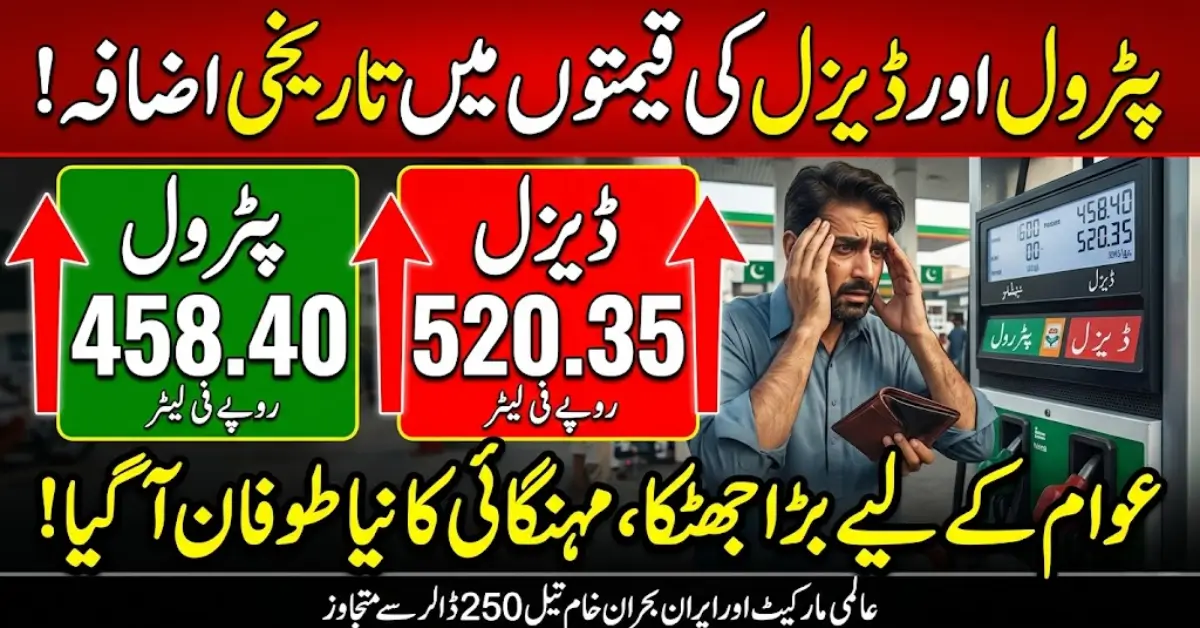
Petrol Price Shock in Pakistan
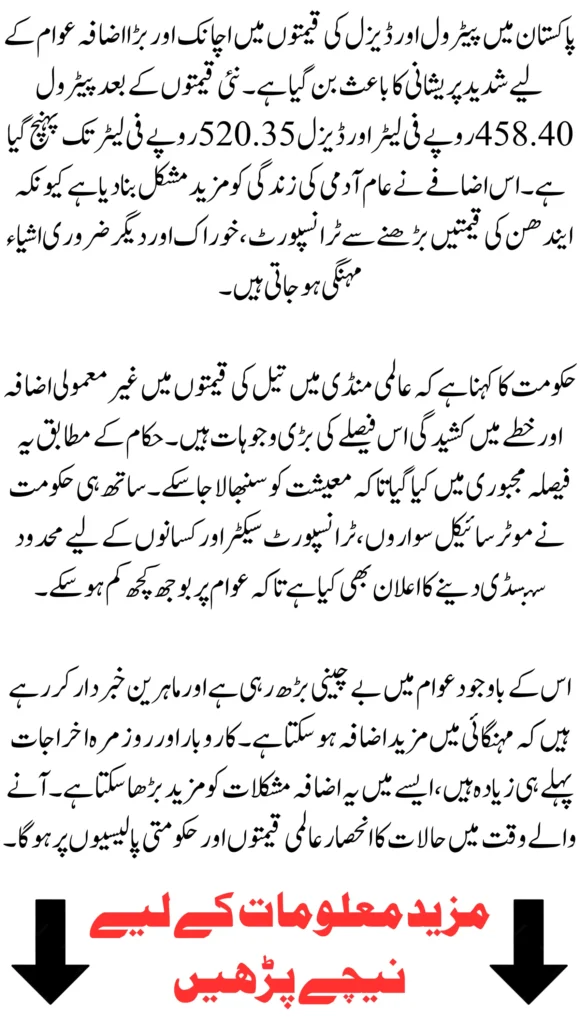
Petrol Price Shock in Pakistan: Pakistanis woke up to a major economic shock as the government announced a historic increase in petroleum prices. The sudden surge has created concern across the country, affecting daily life, transportation costs, and overall inflation. The new prices have set petrol at Rs 458.40 per liter and diesel at Rs 520.35 per liter, making it one of the highest fuel price hikes in the country’s history.
Massive Increase in Petrol and Diesel Prices
The government has increased the price of petrol by Rs 137.23 per liter, while diesel has seen an even bigger jump of Rs 184.49 per liter. These new rates came into effect immediately, putting additional pressure on already struggling citizens.
This sharp increase is being described as a “petrol price shock” due to its sudden implementation and significant impact. Fuel prices directly affect transportation, food prices, and overall cost of living, meaning this decision will have wide-ranging consequences.
Sindh Solar Scheme 2026 Apply Online Know Eligibility Criteria And Required Documents
Government Justifies the Price Hike
During a press conference, Petroleum Minister Ali Pervaiz Malik explained that the decision was not easy but necessary under the current circumstances. According to him, the entire region is facing an energy crisis, and Pakistan is not immune to global economic pressures.
He stated that the government had to take “difficult but responsible decisions” to manage the situation. Rising global oil prices and regional instability have forced many countries to revise their fuel pricing strategies, and Pakistan is following the same path.
Impact of Global Oil Prices and Iran War
One of the key reasons behind this increase is the sharp rise in global crude oil prices. The Petroleum Minister highlighted that crude oil prices have crossed $250 per barrel in the international market, which is a record high.
The ongoing conflict involving Iran has played a major role in disrupting oil supply chains. This has caused a ripple effect across global markets, pushing energy prices upward. As Pakistan relies heavily on imported oil, these global changes directly impact local fuel prices.
Prime Minister’s Austerity Measures
The government has attempted to show that it is sharing the burden of this crisis. According to officials, the Prime Minister has initiated austerity measures, including cutting the salaries of cabinet members.
This move is aimed at reducing government expenses and sending a message that leadership is also making sacrifices. However, despite these steps, the public is still feeling the direct impact of rising fuel costs.
Petrol and Diesel Prices Likely Spike in Pakistan Within Days
Relief Package for Motorcyclists
To reduce the burden on lower-income groups, the government has announced a targeted subsidy for motorcyclists. Under this relief plan:
- A subsidy of Rs 100 per liter will be provided
- Up to 20 liters of petrol per month will be subsidized
- The relief will continue for 3 months
This initiative is expected to benefit millions of daily commuters who rely on motorcycles for transportation.
Subsidy for Public Transport and Freight Vehicles
The government has also introduced subsidies for the transport sector to prevent a sudden increase in fares. These include:
- Rs 100 per liter subsidy on diesel for intercity buses
- Monthly subsidy of Rs 70,000 for freight trucks
- Rs 80,000 subsidy for large freight vehicles
- Rs 100,000 monthly subsidy for passenger buses
These measures aim to control transport fares and reduce the impact on passengers and goods transportation.
Support for Farmers and Small Landowners
Recognizing the impact of rising fuel costs on agriculture, the government has announced financial support for small farmers. A one-time subsidy of Rs 1,500 will be provided during the harvesting season.
This move is intended to help farmers manage increased costs of fuel used in agricultural machinery and transportation.
Flights from Saudi Arabia to Pakistan Resume: A Welcome Relief for Travelers
Subsidy for Railways to Help Lower-Income Passengers
The government has also decided to extend subsidies to Pakistan Railways. This step is expected to benefit lower-income passengers who rely on trains for affordable travel.
By supporting the railway system, the government aims to provide a cheaper alternative to road transport, which is likely to become more expensive due to higher fuel prices.
New Market Timings to Save Fuel and Electricity
In an effort to reduce energy consumption, the government is planning to introduce new market timings. Markets will be encouraged to operate during the daytime to save electricity and fuel.
The final schedule will be announced after consultations with provincial governments. This step is part of a broader strategy to manage energy resources more efficiently during the crisis.
Government to Review Subsidy After One Month
Finance Minister Muhammad Aurangzeb stated that the government will review the subsidy program after one month. This means that further changes could be made depending on the economic situation and global oil prices.
The review will determine whether subsidies should be continued, increased, or adjusted to better target those in need.
PM Orders Easy Registration for Motorcycle and Rickshaw Owners
Public Reaction and Economic Concerns
The sudden increase in petrol and diesel prices has triggered strong reactions from the public. Many people are worried about rising inflation, increased transport fares, and higher prices of essential goods.
Experts warn that this fuel price hike could lead to a chain reaction in the economy, affecting everything from food to industrial production. Businesses may also pass on the increased costs to consumers, making daily life more expensive.
Conclusion
The recent petrol price increase marks a challenging time for Pakistan’s economy. While the government has introduced subsidies and relief measures, the overall impact of such a massive hike cannot be ignored.
As global oil prices remain unstable and regional tensions continue, Pakistan may face further economic challenges in the coming months. For now, citizens will have to adjust to higher fuel costs while hoping for stability in the near future.
Sindh Government Launches EV Pink Taxi Service for Women