
Rs 80 Cut in Petrol Levy
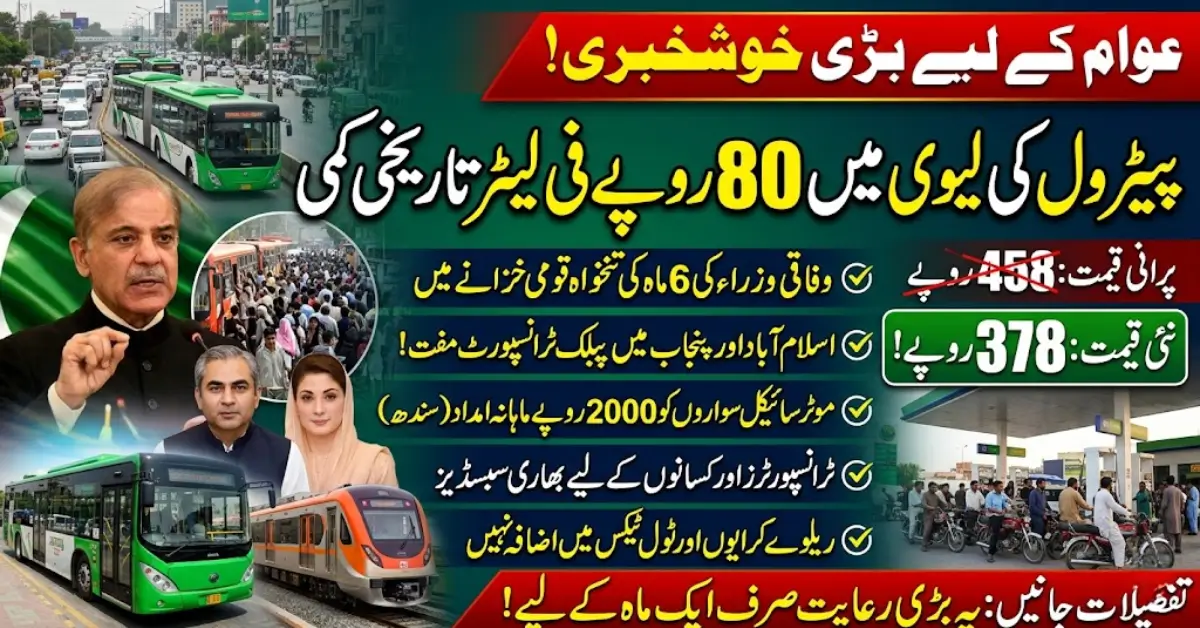
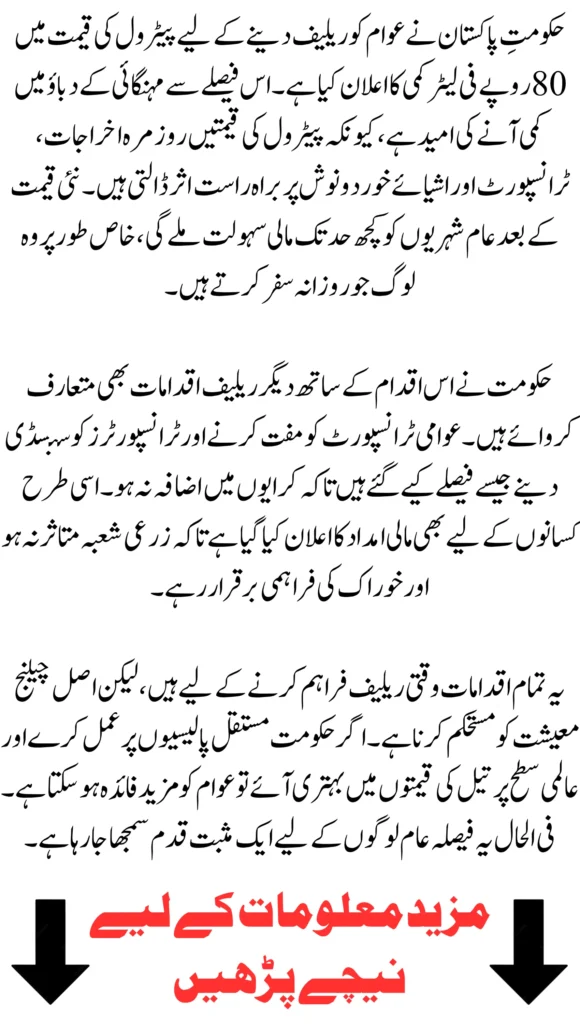
Rs 80 Cut in Petrol Levy In a significant move aimed at easing the financial burden on citizens, Prime Minister Shehbaz Sharif has announced a reduction of Rs 80 per liter in petrol prices across Pakistan. This decision comes at a time when inflation and rising global oil prices have put immense pressure on households and businesses alike. The new petrol price now stands at Rs 378 per liter, down from Rs 458, offering temporary but much-needed relief to the public.
App Based Fuel Subsidy in Pakistan 2026
One-Month Relief Package for Citizens
The government has clarified that this reduction in petrol price will be applicable for one month. The relief is intended as a short-term measure to stabilize economic pressure on the masses. With fuel prices directly impacting transportation, food costs, and daily expenses, this move is expected to provide some breathing space to citizens struggling with inflation.
Ministers to Deposit Six Months’ Salaries
In a symbolic yet impactful step, Prime Minister Shehbaz Sharif also announced that federal ministers will deposit six months of their salaries into the national treasury. Previously, ministers were contributing two months’ salaries, but the increase to six months reflects the government’s effort to demonstrate solidarity with the public during tough economic times.
Free Public Transport in Islamabad and Punjab
To further reduce the burden on citizens, Interior Minister Mohsin Naqvi announced that public transport in Islamabad will be made free. Additionally, Punjab Chief Minister Maryam Nawaz introduced free travel on major transport services, including the Orange Line, Metro Bus, Green Line, and Speedo buses. This initiative is expected to benefit thousands of daily commuters, especially low-income individuals.
BISP Scholarship Increase 2026: New Payments for Women and Children Announced
Subsidies for Transporters and Farmers
The government has also rolled out multiple subsidy programs targeting key sectors of the economy. Goods transporters will receive a subsidy of Rs 100 per liter of fuel to help control rising transportation costs. Additionally, small farmers will be provided Rs 1,500 per acre to support agricultural activities, ensuring that food production remains stable despite rising input costs.
Transport operators will also benefit from monthly financial assistance. Passenger buses will receive Rs 100,000, small trucks Rs 70,000, and large trucks up to Rs 80,000 per month. These measures aim to prevent fare hikes and maintain affordability in the transportation sector.
No Increase in Railway Fares and Toll Taxes
In another relief measure, the Prime Minister announced that railway fares and toll taxes will not be increased. This decision is crucial in maintaining affordable travel options for the public and supporting economic activity across the country. Keeping these costs stable will help control inflationary pressures in other sectors as well.
Sindh Government’s Rs 55 Billion Subsidy Package
The Sindh government has introduced a comprehensive subsidy package worth Rs 55 billion to protect vulnerable segments of society. Chief Minister Murad Ali Shah announced that motorcycle owners will receive Rs 2,000 per month as financial assistance. This initiative is particularly aimed at low-income individuals who rely on motorcycles for daily commuting and earning livelihoods.
Additionally, free registration for motorcycle transfers will be available for 15 days, encouraging people to register vehicles in their own names to qualify for subsidies.
CM Punjab Youth Employability Program 2026: 25,000 Youth to Get Free Training and Jobs
Rising Global Oil Prices and Economic Challenges
The Prime Minister highlighted that the surge in global oil prices has significantly impacted Pakistan’s economy. As a fuel-importing country, Pakistan is highly sensitive to international market fluctuations. The ongoing geopolitical tensions and global inflation have further intensified the economic challenges faced by the country.
He emphasized that even powerful economies around the world are struggling with inflation, making it a global issue rather than a local one. Despite these challenges, the government is taking steps to provide relief and stabilize the economy.
Focus on Public Welfare and Economic Stability
The recent petrol price reduction and subsidy measures reflect the government’s focus on public welfare. By combining immediate relief with targeted subsidies, the government aims to support both individuals and key economic sectors. These steps are also intended to build public trust and demonstrate commitment to addressing economic hardships.
Conclusion
While the Rs 80 reduction in petrol price is a welcome move, it is a temporary solution to a larger economic problem. The government’s broader strategy will need to address structural issues such as energy dependence, inflation control, and economic growth.
For now, the relief package provides some comfort to citizens and businesses. However, long-term stability will depend on consistent policy measures and improvements in global economic conditions. The coming weeks will be crucial in determining whether such initiatives can be sustained and expanded to provide lasting benefits to the people of Pakistan.
CM Punjab Laptop Scheme 2026 Deadline Extended For Online Apply